
A new study suggests that dead stars which are close enough to black holes can be reignited temporarily.
A computer simulation was run by researchers in order to find out what would happen when an extinguished star corpse, called a white dwarf, would pass close to a medium-sized black hole- which ranges between 1,000 and 10,000 Earths when it comes to mass.
It has been discovered that the powerful gravity emitted by the black hole can influence the inert core of the white dwarf so much that the nuclear-fusion processes may start for a few seconds, converting some elements such as carbon and oxygen into iron.
The phenomenon, named ‘’tidal disruption events’’ can also create gravitational waves, ripples in the space-time continuum that were anticipated by Albert Einstein and have been proved to be real by the Laser Interferometer Gravitational-wave Observatory back in 2015.
LIGO cannot directly detect these waves for new, but researchers hope that future technology, which will be operational within two decades, will be able to allow it.
The study also notes that large amounts of material from white dwarfs that are consumed by black holes release intense radiation bursts that can be observed by existing telescope.
The number of intermediate black holes should be tracked down, as it will allow a better understanding of the origins of super black holes. In a statement offered by Chris Fragile, physics and astronomy professor at the College of Charleston, North Carolina, discovering intermediate black holes by following tidal disruption events would dramatically increase the speed of the research.
Supermassive black holes would consume a white dwarf almost instantly, absorbing all the residual radiation that may be emitted, a feature that makes them more elusive in the initial stages.
The study also shows the possible faith of our own sun, as it will inevitably transform into a white dwarf. It is estimated that our sun still has 5 billion years of life.
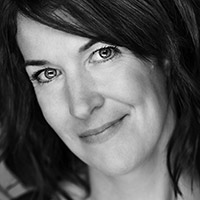
Laura grew up in a small town in northern Quebec. She studied chemistry in college, graduated, and married her husband one month later. They were then blessed with two baby boys within the first four years of marriage. Having babies gave their family a desire to return to the old paths – to nourish their family with traditional, homegrown foods; rid their home of toxic chemicals and petroleum products; and give their boys a chance to know a simple, sustainable way of life. They are currently building a homestead from scratch on two little acres in central Texas. There’s a lot to be done to become somewhat self-sufficient, but they are debt-free and get to spend their days living this simple, good life together with their five young children. Laura is an advocate for people with disabilities.